Overview
AI is changing the way businesses create, distribute and measure video content.
What once required multiple people, expensive equipment and days of production can now be accelerated with AI-assisted tools. From script ideas and video concepts to editing, captions, personalisation and performance analysis, AI is becoming part of the modern video marketing workflow.
But here’s the important question:
Does AI mean businesses can simply generate more videos and expect better results?
Not necessarily.
In 2026, the real advantage isn’t just producing videos faster. It’s using AI to create more relevant, personalised and strategically planned content while keeping human creativity, storytelling and brand identity at the centre.
Let’s explore how AI is reshaping video marketing—and what businesses should do about it.
Why Is AI Becoming Important in Video Marketing?
Traditional video production can involve:
Idea → Script → Shoot → Edit → Review → Publish
Every stage can take time and resources.
AI can now assist with several parts of this workflow, allowing marketing teams to test more ideas, create variations and repurpose content more efficiently.
Industry research from Wistia found that 51% of marketers use AI for video ideation and scripting, while 85% reported that videos containing AI elements performed better in their experience.
The result?
Businesses can potentially create more content without simply increasing production workload.
1. AI Is Making Video Ideation Faster
Writing a video script can take considerable time.
AI can help marketers develop:
- Video hooks
- Script outlines
- Headlines
- Story structures
- Calls to action
- Different versions of the same message
For example, one core idea could be adapted into:
A 30-second Reel
A 60-second explainer
A YouTube video
A LinkedIn video
A product advertisement
This makes content repurposing significantly more efficient.
But AI shouldn’t be allowed to create every script without human editing.
Why?
Because generic language sounds generic.
Your customers should hear your brand—not an AI template.
2. AI Is Speeding Up Scriptwriting
If you want to sell products online, you need more than a standard business website.
An eCommerce website may require:
- Product catalogue
- Product categories
- Shopping cart
- Checkout
- Payment gateway
- Shipping integration
- Customer accounts
- Order management
- Inventory management
- Coupons and offers
- Product filters
3. AI Is Improving Video Editing Workflows
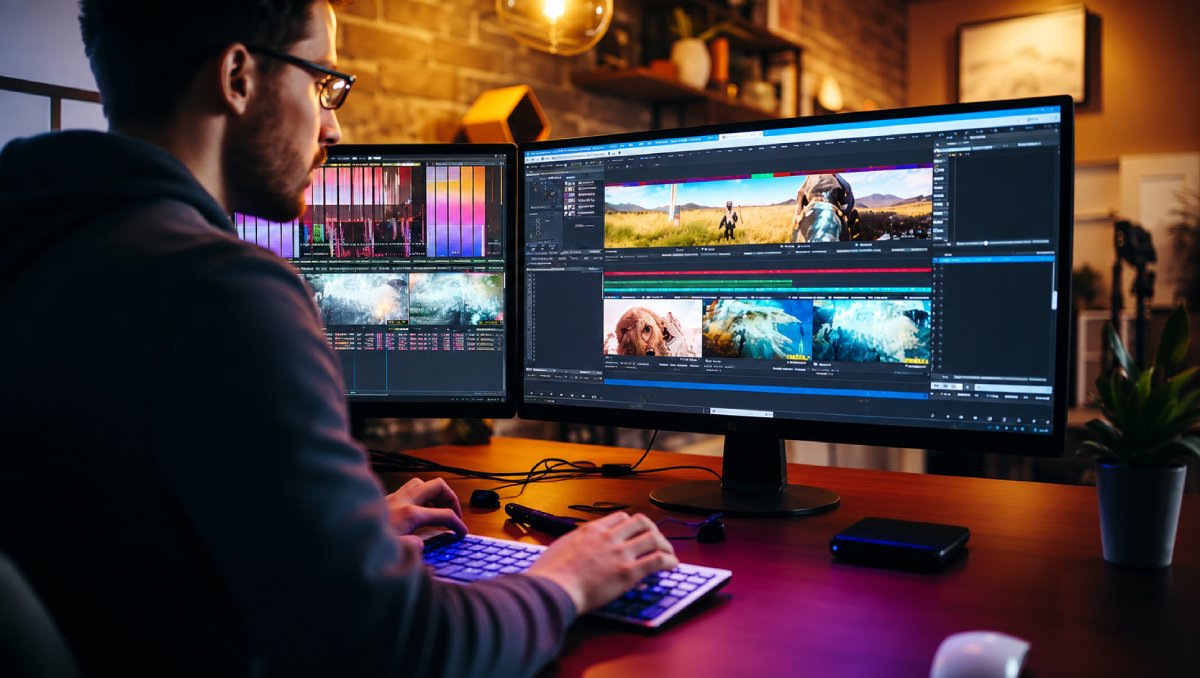
Editing is another area where AI can reduce repetitive work.
AI-assisted editing can help with:
- Removing silences
- Generating captions
- Transcribing speech
- Detecting scenes
- Creating clips
- Audio enhancement
- Formatting videos for different platforms
This doesn’t mean professional editors are becoming unnecessary.
Instead, editors can spend more time on:
Storytelling + Pacing + Brand Quality + Creative Direction
while AI handles more repetitive tasks.
4. AI Is Changing Video Advertising
AI is also influencing how businesses create and test advertising creatives.
Instead of producing one advertisement and waiting for results, marketers can experiment with multiple:
- Hooks
- Visuals
- Headlines
- CTAs
- Offers
- Audience segments
- Video lengths
This can create a faster feedback loop:
Create → Test → Measure → Learn → Improve
The businesses that learn faster can potentially optimise their creative strategy faster.
5. AI Is Changing the Role of the Video Marketer
AI isn’t simply changing video production.
It’s changing what marketers spend their time doing.
Previously, significant effort could go into:
Writing → Editing → Formatting → Repetitive Production
Now, more attention can shift toward:
Strategy → Creativity → Audience Understanding → Testing → Optimisation
In other words:
AI can accelerate production, but humans still need to direct the strategy.
6. Will AI Replace Human Video Creators?
This is one of the biggest questions businesses are asking.
The answer is:
AI is more likely to change creative workflows than completely replace human creativity.
Why?
Because successful marketing videos require more than visual generation.
They need:
- Brand understanding
- Emotional storytelling
- Customer insight
- Creative judgement
- Strategic positioning
- Cultural context
- Original ideas
AI can assist with execution.
But knowing what your audience should hear, feel and do is a strategic human decision.
The Biggest Risk: Making Generic AI Videos
Here’s where businesses need to be careful.
If everyone uses AI to create content, simply using AI will no longer make your content different.
In fact, businesses may end up producing:
More content that looks exactly the same.
Generic scripts.
Generic voices.
Generic visuals.
Generic hooks.
Generic CTAs.
The result?
More content—but less attention.
That’s why AI should be treated as a creative accelerator, not a replacement for creative strategy.
Human Creativity + AI: The Better Combination
The strongest approach isn’t:
AI vs Human
It’s:
AI + Human
AI can help with:
- Research
- Ideation
- Drafting
- Editing
- Repurposing
- Testing
- Analysis
Humans should lead:
- Strategy
- Brand voice
- Storytelling
- Creative direction
- Customer understanding
- Final quality control
This combination can create a video marketing workflow that is both efficient and authentic.
How Should Businesses Use AI in Video Marketing?
Instead of immediately trying to automate everything, start with areas where AI can create genuine efficiency.
Step 1: Use AI for Research
Identify customer questions, content opportunities and trends.
Step 2: Use AI for Ideation
Generate concepts and angles.
Step 3: Use AI for Production Assistance
Speed up editing, captions, transcription and repurposing.
Step 4: Keep Human Creative Direction
Ensure the content sounds and looks like your brand.
Step 5: Test Multiple Versions
Experiment with hooks, formats and messaging.
Step 6: Analyse Performance
Identify what actually drives engagement and conversions.
Step 7: Improve the Next Campaign
Turn performance data into creative decisions.
Conclusion:
AI is changing video marketing by making production faster, testing easier and personalisation more scalable.
But the biggest opportunity isn’t simply creating more videos.
It’s combining AI efficiency with human creativity, strategy and storytelling to create content that people actually want to watch.
In 2026, the brands that win won’t necessarily be the ones producing the most videos.
They’ll be the ones using AI to create better videos, faster—and with a clear purpose.